
 Bindi enjoys being cozy. This is her second favorite place in the house. Her first favorite is inside Brian’s sweatshirt, as long as he’s wearing it.
In Hiding
11 Oct 2012 3 Comments
Preserving Basil
08 Oct 2012 4 Comments
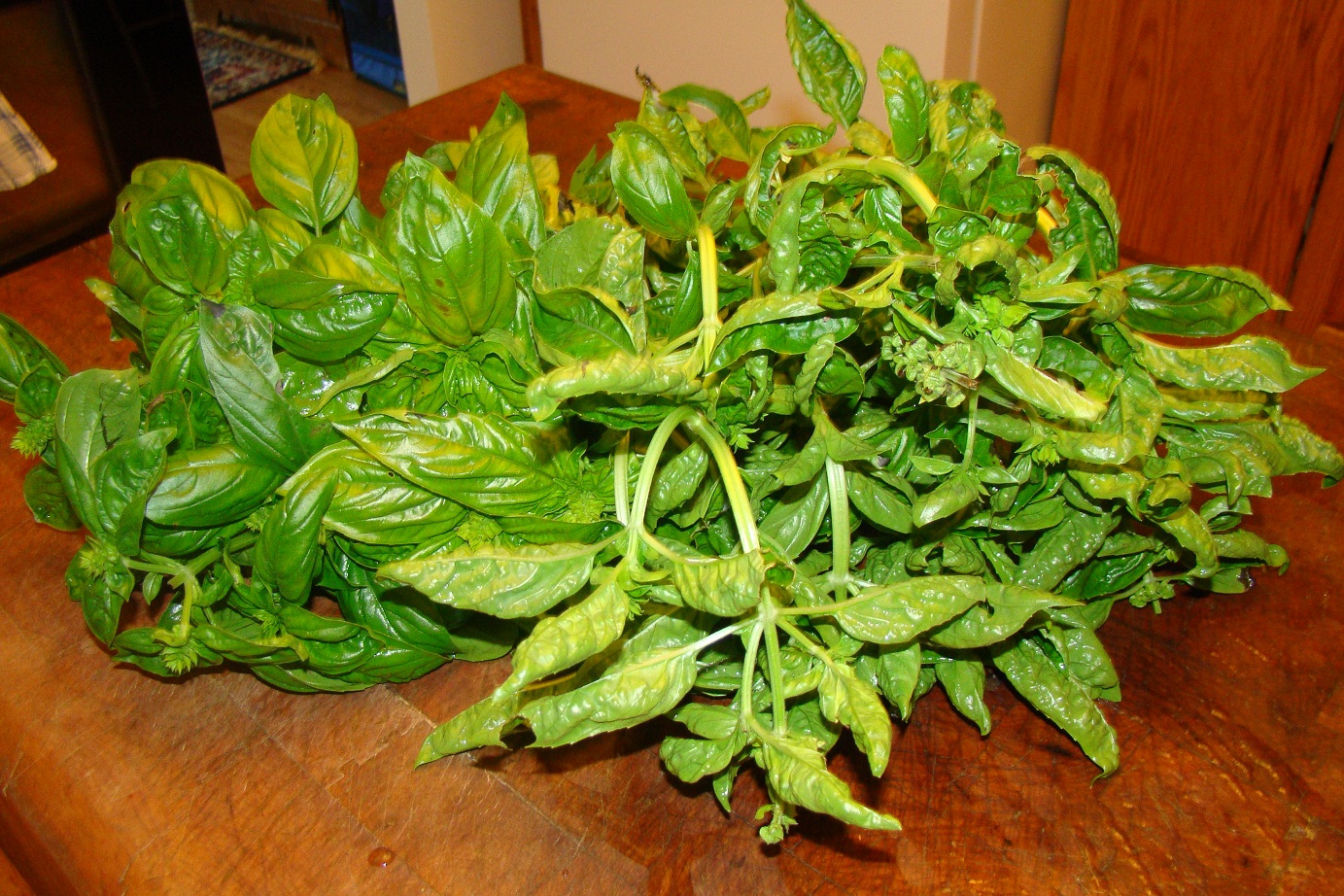


 It’s getting cold here and with the first frost right around the corner I was getting bummed about losing access to fresh basil. I dry some every year and have made and frozen pesto in the past, but it’s not as versatile as just plain basil. I decided to try something new. I packed my mini chopper with leaves and added 3/4 cup of olive oil. Once processed, I spread it on top of a piece of Saran wrap laid inside a baking dish. Into the freezer overnight and I now have a brick of frozen basil in olive oil. It’s in the freezer in a gallon storage bag. I’ll just break off a chunk this winter for any recipe calling for basil. Pretty cool!
Bitter Melon
05 Oct 2012 2 Comments
We do an annual garden and winery tour with friends from the farmer’s market. Last year, we were gifted some bitter melon seeds at one of the farms we visited. This is the coolest looking vegetable ever. It’s a vine that grows warty squash-like fruits. When they ripen, they turn bright yellow and burst open to show their large bright red seeds. I find them fascinating but can’t comment on their flavor because I haven’t tried one yet. I’m chicken…
Patchwork Halloween Project Bag
03 Oct 2012 4 Comments
in Uncategorized Tags: Crafts
Here is a project bag I made for my friend Lora for a Halloween swap we’re doing. It can be used to keep a crochet or knitting project intact while in progress, or for a million other things. I took some in-process photos and decided to write a tutorial for it.
If you hover your pointer over the photo slideshow, you can pause it to review the photos.
The first thing I did was cut out forty eight 2.5 by 2.5 inch squares, then laid them out how I thought they looked best.
I started sewing the squares together in rows of four with a 1/4 inch seam allowance.
Once one row was completed, I ironed the seams, set it aside, and went on to the next row.
When I had all the rows completed, I stared sewing them together with the same 1/4 inch seam allowance. It came together pretty fast!
I chose linen for my accent fabric at the bottom of the bag, but you could use most anything. I cut a piece of linen 3 1/2 by 14 1/2 inches and pinned it to the bottom of my patchwork piece. Another 1/4 inch seam and it’s attached.
I gave it a hand embroidered detail by doing a running stitch with six strands of orange embroidery floss right along the seam I just completed.
Next it’s time to turn your large rectangular piece into a tube which will form the sides of the bag. Just fold it in half with right sides together and sew a 1/4 inch seam up the edges. Press the seam open when you’re done.
Using a compass, draw a 7 3/4 inch diameter circle on a piece of paper then cut it out. This will be your template for the bottom of your bag. Pin the paper circle to the linen fabric and cut out the circle. Pin the linen circle to the bottom of the tube.
Sew the round bottom to the sides of the bag with a 1/4 inch seam. Clip the curve every half inch.
The lining is really similar to the process you just followed to make the exterior of your bag. Cut a piece of lining fabric 11 by 24 1/2 inches and sew up the short side into a tube. Cut another 7 3/4 inch circle, pin it right side together to the bottom of your tube and sew it on with a 1/4 inch seam Clip the curve.
For the drawstring case, cut a piece of fabric 2.5 by 25.5 inches and iron a 1/4 inch seam along one of the long edges. Turn both of the short ends over 1/4 inch, then another 1/4 inch run a seam down the middle to give the drawstring opening a finished edge. NOTE: the drawstring used in this project was actually 1.5 by 24.5 inches and I decided for future projects, I would increase the width in order to make it easier to sew.
Place the lining inside the exterior bag. The wrong side of your lining should be touching the wrong side of your patchwork piece. Now it’s time to attach the drawstring case along the top of the patchwork piece. With right sides together, pin the un-ironed edge of your drawstring case to the outside of your bag.
Sew the drawstring case on using a 1/4 inch seam.
The final thing you need to do is to fold the drawstring case over and hand stitch the ironed edge to the lining.
Thread a drawstring and you’re done! This project won a second place ribbon at our county fair!
All Wet
01 Oct 2012 Leave a comment
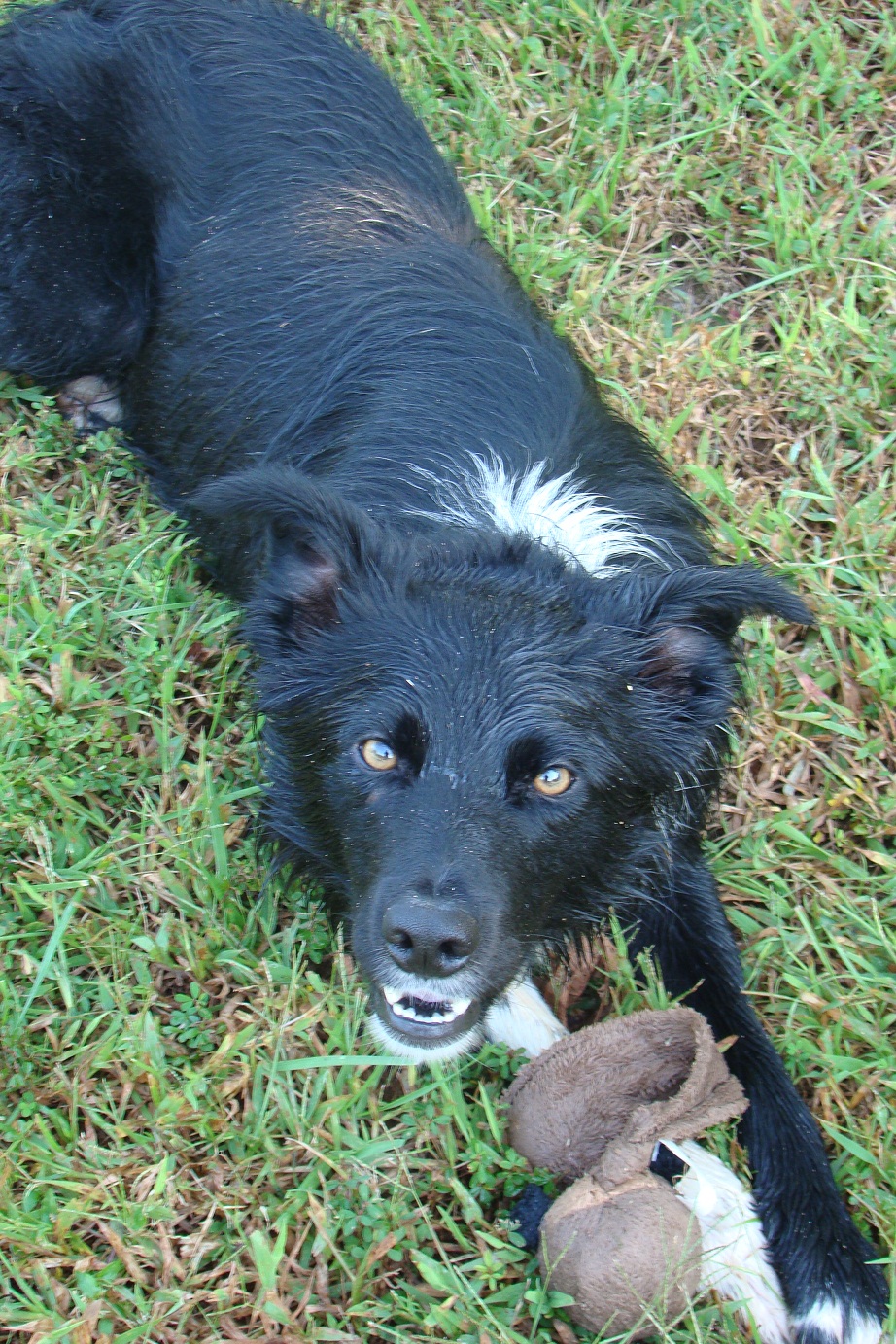 Jack discovered the pond on our front yard while waiting for us to be done with digging sweet potatoes in the garden. Evidently, he decided his toy needed a swim, too. We don’t trust him not to run off still, so he doesn’t go out unsupervised. I think he needs to go for a boat ride!


 Missing Willow Farm